What skills do we need to build an AI-supported DA workflow?
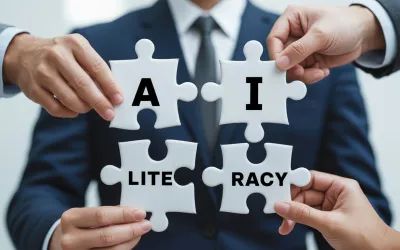
Building an AI-supported DA workflow requires more than technical skill. Successful implementations combine DA domain expertise, data literacy, technical integration capability, governance discipline and change management. Most organisations already have some of these skills in-house; the key is recognising the gaps and deciding deliberately whether to develop, hire or bring in external support for each one.
Key takeaways
- AI-supported DA workflows need a cross-functional mix of skills, not just a technical or IT hire
- DA domain expertise remains essential throughout implementation, particularly for defining correct outcomes and handling exceptions
- Data literacy, the ability to interpret and validate bordereaux data structures, is a distinct skill from technical AI implementation
- Governance and change management capability are as important to success as the technology itself
Many delegated authority organisations approach AI-supported workflows as if they were a purely technical procurement decision.
The project gets assigned to IT, a vendor is selected, and the assumption is that the technology will do the rest.
In practice, the organisations that succeed are the ones that resource this as a cross-functional effort from the start.
The technology is only part of the picture. The skills that determine whether an AI-supported DA workflow actually works are spread across domain expertise, data literacy, technical integration, governance and change management.
Understanding what each of these contributes, and where the gaps are likely to sit, is the first practical step before implementation begins.
The operational challenge of resourcing AI-supported DA workflows
When an organisation decides to introduce AI into its bordereaux processing, the instinct is often to treat it as a technology project.
A vendor is engaged, an IT lead is appointed, and the DA operations team is consulted occasionally rather than involved throughout.
This usually produces a system that is technically functional but operationally unusable.
The reason is straightforward. The people who understand what a valid bordereau looks like, how exceptions should be handled and how coverholder relationships actually work are the DA operations team, not IT.
Without their sustained involvement, the workflow ends up encoding assumptions that do not match how the business actually operates.
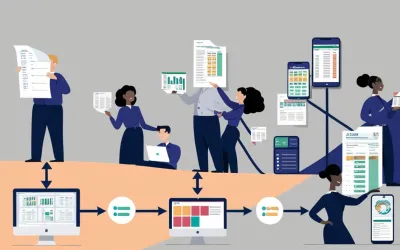
Resourcing an AI-supported DA workflow correctly means recognising, from the outset, that no single team or department can deliver it alone.
How organisations have traditionally resourced DA process change
DA process improvement has historically been led by operations teams, with IT support brought in for specific technical tasks such as system integration or report automation.
A typical bordereaux process improvement project might involve an operations lead defining requirements, a business analyst documenting current processes, and IT delivering a defined technical change, such as a new import template or reporting tool.
This model works reasonably well for incremental, well-defined change, where the shape of the solution is largely known in advance.
Introducing AI does not replace this model, but it does stretch it. The technology itself requires more sustained data literacy and integration capability than a typical spreadsheet template change, and the way AI-supported systems learn and improve over time means oversight cannot be a one-off sign-off at project close.
Organisations that simply apply their existing change model, without expanding the skill mix involved, often find gaps emerge partway through implementation rather than before it.
The skill categories an AI-supported DA workflow actually needs
Five distinct categories of skill tend to determine whether an AI-supported DA workflow succeeds.
DA domain expertise. This is the ability to define what correct bordereaux data actually looks like, understand coverholder and MGA relationships, and judge how exceptions should be resolved. This expertise already exists within most DA operations teams and remains essential throughout implementation. AI does not remove the need for it; if anything, it increases the value of clearly articulating this knowledge so it can inform validation rules and exception criteria.
Data literacy. This is the practical skill of interpreting bordereaux structures, spotting data quality issues and understanding how information should be transformed into a standard format. It sits between domain knowledge and technical implementation, and is often underdeveloped in DA teams that have relied on manual, spreadsheet-based processes rather than structured data thinking.
Technical and integration capability. This covers the practical work of connecting AI tools to existing systems, configuring outputs and maintaining the technical infrastructure. This is the area most likely to be delivered through vendor or partner support rather than built entirely in-house, particularly for smaller DA operations.
Governance and oversight. Someone needs to own the ongoing question of whether the AI-supported workflow is performing correctly, how exceptions are escalated and how confidence thresholds are set and reviewed. This is a distinct discipline from domain expertise; it requires the authority and structure to hold the workflow accountable over time, not just at go-live.
Change management. Introducing a new workflow affects not only internal teams but also coverholders and MGAs who submit bordereaux. Bringing external parties along, communicating changes to submission expectations, and managing the transition period are frequently underestimated tasks that require dedicated attention.
What changes with AI is not that these skills become unnecessary. It is that the balance of effort shifts, from manually interpreting every bordereau line by line, toward defining rules, reviewing exceptions and maintaining oversight of a system that handles routine interpretation.
Assessing and closing skill gaps before implementation
Before starting implementation, it is worth running a straightforward internal assessment against each of the five categories above.
Useful questions include:
- Who currently understands, in detail, what correct data looks like for each bordereaux type and coverholder relationship?
- Does anyone on the team have experience validating or transforming structured data, beyond manual spreadsheet checks?
- Do we have the technical capability in-house to integrate new tools with existing systems, or will this need to be sourced externally?
- Who will own ongoing governance of the workflow once it is live, and do they have the authority to make decisions about thresholds and escalation?
- Has anyone been assigned responsibility for managing the change with coverholders and MGAs, not just internal staff?
Answering these honestly usually reveals that domain expertise and, often, governance capacity already exist within the DA team, while data literacy and technical integration are the more common gaps.
Where gaps exist, organisations generally have two realistic options: develop the capability internally through training and structured involvement in the implementation, or bring in external support, whether through a vendor, partner or contractor, for the specific gap identified.
The risk to avoid is discovering these gaps mid-project, once the workflow has already been designed without the input needed to make it operationally workable.
Example
A Lloyd's managing agent is preparing to introduce AI-assisted mapping for its agricultural risk bordereaux, received monthly from coverholders across several territories.
Before starting, the DA operations lead runs a short skills review with the project sponsor, mapping existing team capability against the categories needed: bordereaux domain expertise, data validation skill, integration capability and governance oversight.
They identify that domain expertise and oversight are well covered internally, but data literacy and technical integration are gaps, and agree to bring in external support for the technical build while keeping DA staff closely involved in defining validation rules and exception handling.
By identifying the gap early and deciding deliberately how to fill it, the managing agent avoids handing the project entirely to IT. DA staff remain central to defining what correct data looks like, while technical specialists handle the integration work, resulting in a workflow that fits how the team actually operates.
FAQs
-
Do we need to hire data scientists to build an AI-supported DA workflow?
Most implementations do not require an in-house data science team. The more critical skills are DA domain expertise and practical data literacy, understanding bordereaux structures and validation requirements. Technical AI capability is often available through vendors or implementation partners rather than requiring specialist hires.
-
Can our existing DA team develop these skills, or do we need to hire externally?
Many organisations develop capability internally through training and direct involvement in implementation, particularly for domain expertise and data literacy. External support is more commonly used for specialised technical integration work, rather than requiring wholesale new hiring across every skill category.
-
What happens to existing DA analyst roles once AI is introduced?
Roles typically shift toward exception handling, defining validation rules and maintaining oversight, rather than being eliminated. Domain expertise remains essential; AI changes where that expertise is applied, not whether it is needed.