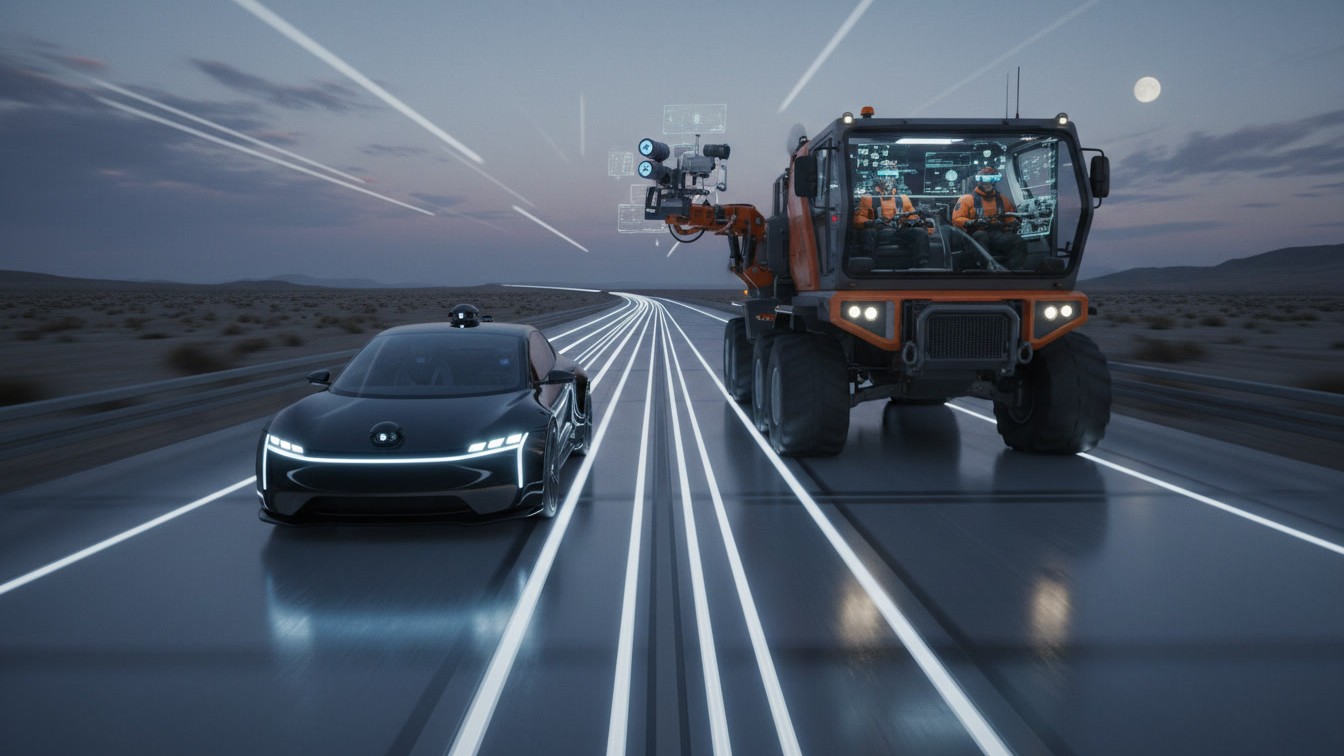
Technology has transformed insurance, but not evenly. Personal lines insurers have moved faster and further with modern technology than their commercial counterparts. This gap is not the result of hesitation or lack of innovation; it reflects the fundamentally different jobs these two markets perform.
At its core, insuring a person’s car is very different from insuring a company’s factory.
two types of insurance, two very different jobs
Personal lines insurance (PL) covers individuals. It includes auto, homeowners, renters and personal umbrella policies. These products are sold in the millions and cover highly predictable, repeatable risks. Insuring a family car or a single-family home looks remarkably similar from one policyholder to the next.
Commercial lines insurance (CL) covers businesses. It protects factories, hospitals, fleets, construction projects, cyber operations and more. There are far fewer policies, but each one is unique. These risks are complex, interconnected and often involve very large financial stakes. Insuring a warehouse full of robots or a hospital operating 24/7 requires deep expertise and tailored coverage. Because the risks are different, the role of technology is different.
why technology took off faster in personal insurance
Personal insurance aligns closely with what modern technology does best because it involves huge volumes of data, a high degree of standardisation and strong consumer demand for speed and convenience. Millions of similar drivers, homes and claims create repeatable patterns that allow technology to replace manual processes at scale.
As a result, personal lines insurers have widely adopted technologies such as mobile apps for instant quotes, telematics to track driving behaviour, AI to estimate damage from photos, automated claims processing and payments. The outcome is insurance that is faster, cheaper, and more convenient.
why commercial insurance moves more carefully
Commercial insurance operates under very different constraints, dealing with one-of-a-kind risks, very large financial exposures and highly customised legal contracts where even small errors can cost millions. Because the stakes are so high, automation is deemed risky and technology is used to support rather than replace expert judgement.
Drones are used for site inspections; sensors for detecting leaks, fires or equipment failures; cyber solutions for monitoring hacking threats; and AI models help underwriters analyse complex. In commercial insurance, accuracy matters most. Technology is therefore focused on areas such as loss prevention, risk insight and decision support.
Personal insurers use technology to decide. Commercial insurers use technology to inform.
who is embracing technology more?
Personal lines insurers adopted modern technology earlier and more aggressively. They rely heavily on automation and straight-through processing. Commercial insurers are also embracing technology, but in a different, and more measured way. Integrating it into underwriting, risk engineering and claims rather than fully automating those functions. Both markets are innovating, but their paths reflect the nature of the risks they insure.
what happens if commercial insurance does not embrace new technology?
Despite the more conservative approach, commercial lines insurers need to keep up with fast moving technology trends. If they fail to continue modernising, the consequences could be serious:
• Inability to manage data overload as risks become more complex and interconnected
• Slower underwriting and claims processes, driving customers toward more tech-enabled competitors
• Higher loss ratios due to missed early warning signs that sensors and analytics could detect
• Reduced relevance as new risks cyber, climate, automation outpace traditional tools
Without technology, human expertise alone will struggle to scale in an increasingly data-rich and fast-moving risk environment.
The future of insurance is likely to be a blended model rather than purely automated or purely human. Personal insurance will bring humans into complex or disputed cases where empathy and judgment are essential, while commercial insurance will expand its use of AI to manage data volume, scenario modelling and real-time risk monitoring.
Both markets will depend on technology that is explainable, trustworthy and well regulated. Insurance is neither slow nor fast by accident it adopts technology based on what is being insured, how much is at stake and how repeatable the risk is. Using the same tools to solve very different problems.
For organisations considering how best to modernise their insurance operations, the challenge is rarely choosing a technology. It is understanding where that technology can create the greatest value.
If you’d like to explore what this could mean for your organisation, get in touch for an informal conversation.
Or see how Wisereach is helping specialty insurers modernise processes, data flows and technology here.