What is a Third-Party Administrator (TPA)?
A Third-Party Administrator (TPA) is a specialist organisation appointed to handle claims, and sometimes other policy administration tasks, on behalf of an insurer or coverholder under a delegated authority arrangement. It does not typically bind risks; its role is administrative rather than underwriting.
Key takeaways
- A TPA is appointed primarily to administer claims (and sometimes policy servicing) rather than to underwrite or bind risks.
- TPAs are distinct from coverholders and MGAs, which typically hold binding authority.
- A single delegated authority arrangement may involve a coverholder, an MGA and a TPA simultaneously, each with a different role.
- TPA involvement adds another data source into the delegated authority chain, which has implications for bordereaux consistency and oversight.
Delegated authority arrangements do not always stop at a single coverholder or managing general agent.
Often, a further party is appointed to handle a specific function on behalf of the insurer or coverholder: administering claims.
That party is known as a Third-Party Administrator, or TPA.
Understanding what a TPA does, and how it differs from a coverholder or MGA, is essential for anyone trying to make sense of who holds which responsibilities within a delegated authority chain, and where the data supporting oversight and reporting actually originates.
Why insurers use a TPA
Handling claims well requires local expertise, established adjuster networks and, often, the ability to respond quickly in a specific territory or class of business.
An insurer or coverholder does not always have that capability in-house, particularly when business is written in a region where they have no direct presence.
Appointing a TPA allows the claims function to be handled by a specialist, without the insurer needing to build local claims infrastructure of its own.
Common drivers for using a TPA include:
- Specialist claims expertise in a particular class of business.
- Local market knowledge and language capability.
- Established relationships with loss adjusters and suppliers.
- Cost efficiency and scalability, particularly for smaller or geographically dispersed accounts.
How a TPA differs from a coverholder or MGA
A coverholder is a party granted authority by an insurer to enter into contracts of insurance on its behalf, within the terms of a binding authority agreement. A Managing General Agent (MGA) typically performs a similar underwriting function, often with a broader remit.
A TPA is different. Its role is administrative rather than underwriting. A TPA does not typically bind risks or agree new policy terms; instead, it is appointed to manage what happens after a policy has already been written, most commonly the handling and administration of claims.
In some arrangements, a single organisation may perform more than one of these roles. However, conceptually, binding authority and claims administration are separate functions, and it is common for different organisations to carry them out.
Where a TPA sits in the delegated authority chain
A typical chain might involve:
- An insurer, who carries the underwriting risk.
- A coverholder or MGA, who holds authority to write business on the insurer's behalf.
- A TPA, appointed by the insurer or coverholder to administer claims arising under that business.
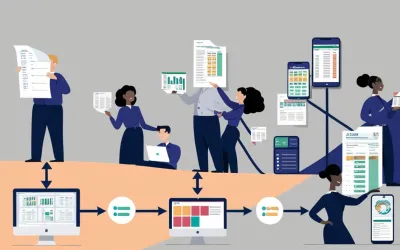
Each party generates its own records. The coverholder or MGA typically produces premium bordereaux, while the TPA produces claims bordereaux. Both ultimately need to be reconciled and reported to the insurer.
Why TPA involvement matters for data flow
Every additional party in the chain is an additional point where data is created, formatted and handed off.
A TPA will usually operate its own claims system, with its own terminology, structure and reporting cadence. When multiple TPAs are involved across different coverholders or territories, the resulting claims bordereaux can vary just as much as premium bordereaux do, if not more, because claims data tends to include more variable fields such as reserves, payments, recoveries and status updates.
This makes clarity over accountability essential. Oversight teams need to know which entity, the coverholder, the MGA or the TPA, is responsible for the accuracy of which pieces of data, and how claims bordereaux from a TPA are reconciled with premium information from the coverholder.
Example
A Lloyd's managing agent delegates binding authority for a marine cargo account to an overseas coverholder. The coverholder, in turn, appoints a specialist TPA to handle claims arising under the binder, since the TPA has local expertise and established loss adjuster networks in the region.
Each month, the TPA submits a claims bordereau to the coverholder, which is then consolidated with the premium bordereau before being sent to the managing agent.
The managing agent gains access to specialist regional claims handling without building in-house capability, while maintaining oversight through the coverholder's consolidated bordereaux reporting. Clear delineation of the TPA's role helps the managing agent identify where claims data originates when reviewing the consolidated bordereau.
FAQs
-
Is a TPA the same as a coverholder?
No. A coverholder typically holds binding authority to write business on an insurer's behalf, while a TPA typically administers claims and does not bind risks. In some arrangements the same organisation may perform both roles, but the two functions are conceptually distinct.
-
Does a TPA have authority to settle claims without insurer approval?
This depends entirely on the terms of the TPA agreement. Some TPAs hold delegated claims settlement authority up to agreed limits, while others must refer claims back to the insurer or coverholder for approval before settlement.
-
Why would an insurer use a TPA instead of handling claims in-house?
Common drivers include specialist claims expertise, local market knowledge, language capability, cost efficiency and scalability, particularly for business written in territories where the insurer has no direct presence.