What Are the Benefits of AI Bordereaux Processing?
AI bordereaux processing primarily benefits delegated authority teams by dramatically reducing the time spent manually interpreting and mapping inconsistent bordereaux formats, improving consistency and accuracy of data extraction, and surfacing exceptions faster—while final review and sign-off remain with experienced professionals.
Key takeaways
- AI significantly reduces the manual effort of interpreting and mapping varied bordereaux formats.
- It improves consistency and reduces human error in repetitive data extraction tasks.
- AI can process higher volumes of bordereaux faster, supporting scalability as coverholder relationships grow.
- AI does not remove the need for oversight—exception handling and judgement remain with DA professionals.
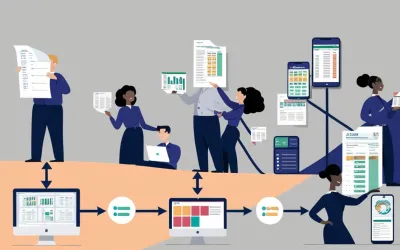
Every delegated authority team knows the drill: bordereaux arrive every month from coverholders and MGAs, each with their own spreadsheet layout, terminology and level of data quality.
Before that data can support accounting, claims handling or oversight reporting, someone has to interpret it, map it to a standard structure and check it for errors.
As coverholder relationships grow, so does the volume of this work—and so does the temptation to look at AI as a way of managing it.
But what does AI actually change, operationally, when applied to bordereaux processing? This article sets out the genuine benefits, grounded in real operational pain points, and is equally clear about what still requires human judgement.
The Operational Burden of Manual Bordereaux Processing
Bordereaux processing is time-consuming largely because no two submissions look the same.
One coverholder's spreadsheet may use Policy Number, another Certificate Ref. Premiums might be labelled GWP, Written Premium or something else entirely. Dates, currencies and even the order of columns can all differ.
Operations teams must repeatedly interpret these differences, map them to a consistent internal structure, and check the results for accuracy before the data can be trusted.
As the number of coverholders grows, this burden multiplies. A managing agent working with thirty coverholders may effectively be maintaining thirty different sets of assumptions about how to read incoming data—and revisiting many of them every time a coverholder changes their template.
The result is a process that is slow, repetitive and vulnerable to error, particularly when deadlines are tight and volumes are high.
Traditional Approaches to Bordereaux Processing
Most DA teams currently manage this burden through a combination of manual review, spreadsheet macros and templated mapping rules.
Manual review remains common, particularly for smaller volumes or unfamiliar submissions. It is flexible and benefits from human judgement, but it does not scale well and is inherently inconsistent between reviewers.
Spreadsheet macros and predefined import templates automate parts of the process once a coverholder's format is known. These tools work well while formats remain stable, but they require ongoing maintenance—every time a coverholder changes a column heading or introduces a new product line, the template usually needs updating.
Some organisations outsource data entry and initial processing to third parties. This can relieve internal capacity pressure, but it does not remove the underlying interpretation problem, and it introduces its own oversight and quality control requirements.
Each of these approaches has genuine value. None of them fully resolves the core challenge: understanding varied, inconsistent data quickly and consistently at scale.
Where AI Genuinely Helps
This is where AI's benefits are most concrete.
Rather than relying on fixed column-name matching, AI can recognise the underlying business concept behind a field—identifying that Certificate Ref, Policy No and Policy Number likely mean the same thing—and map it to a standard structure without a new template being built from scratch each time.
This produces several practical benefits:
- Speed at scale. Bordereaux that might take a team days to manually reformat and check can often be processed in hours, particularly where volumes are high and formats vary widely.
- Consistency. The same logic is applied across every submission, reducing the variation that occurs when different reviewers interpret ambiguous fields differently.
- Faster anomaly detection. AI can flag inconsistent premium figures, missing fields or unexpected values for review, rather than these being discovered later in the reporting cycle.
- Adaptability to new formats. When a coverholder changes their spreadsheet layout, AI-based approaches generally require less rebuilding than a rigid, template-dependent system.
These are genuine, measurable operational improvements—not abstract claims about AI's potential. They apply most strongly where bordereaux volume and format variability are already causing real strain on operations teams.
What Still Requires Human Oversight
AI's benefits are real, but they are not a substitute for professional judgement.
Exception handling remains a human responsibility. When AI flags an inconsistent premium figure or an unusual claims value, an experienced professional still needs to investigate and decide how to resolve it.
Contractual interpretation—understanding what a specific binder agreement permits or requires—remains firmly within the expertise of DA professionals, not something AI is positioned to decide.
Sign-off and accountability for the final, validated data used in underwriting, claims or regulatory reporting continues to sit with the people responsible for oversight, not with the software that helped prepare it.
Organisations that adopt AI for bordereaux processing should expect to spend less time on repetitive formatting and mapping—but should not expect exception handling or governance responsibilities to disappear. The realistic outcome is a shift in where effort is spent, not the removal of effort altogether.
Example
A Lloyd's managing agent receives monthly bordereaux from twelve coverholders writing agricultural risk across different territories, each using a different spreadsheet template with inconsistent column naming and structure.
Using AI to automatically recognise and map fields across the twelve different templates, the operations analyst reduces bordereaux processing time from several days to a few hours.
Crucially, the AI flags inconsistent premium figures for the analyst's review rather than silently accepting them—so the time saved on formatting and mapping is redirected toward reviewing genuine exceptions.
FAQs
-
Does AI bordereaux processing eliminate the need for manual review entirely?
No. AI reduces the repetitive work of interpreting and mapping bordereaux formats, but exceptions, anomalies and judgement calls still require review by experienced delegated authority professionals. AI changes where effort is spent, not whether oversight is needed.
-
How much faster is AI bordereaux processing compared to manual methods?
The speed gain depends on bordereaux volume and how much formats vary between coverholders. For high-volume, inconsistent submissions, processing that previously took several days can often be reduced to a few hours. Lower-volume or already-standardised submissions will see smaller gains.
-
Can AI handle bordereaux in completely new formats it hasn't seen before?
Modern AI approaches generally generalise better to unfamiliar formats than rigid, template-based systems, since they interpret the meaning of fields rather than matching exact column names. Accuracy still benefits from human feedback and oversight, particularly when a genuinely new or unusual format is first encountered.